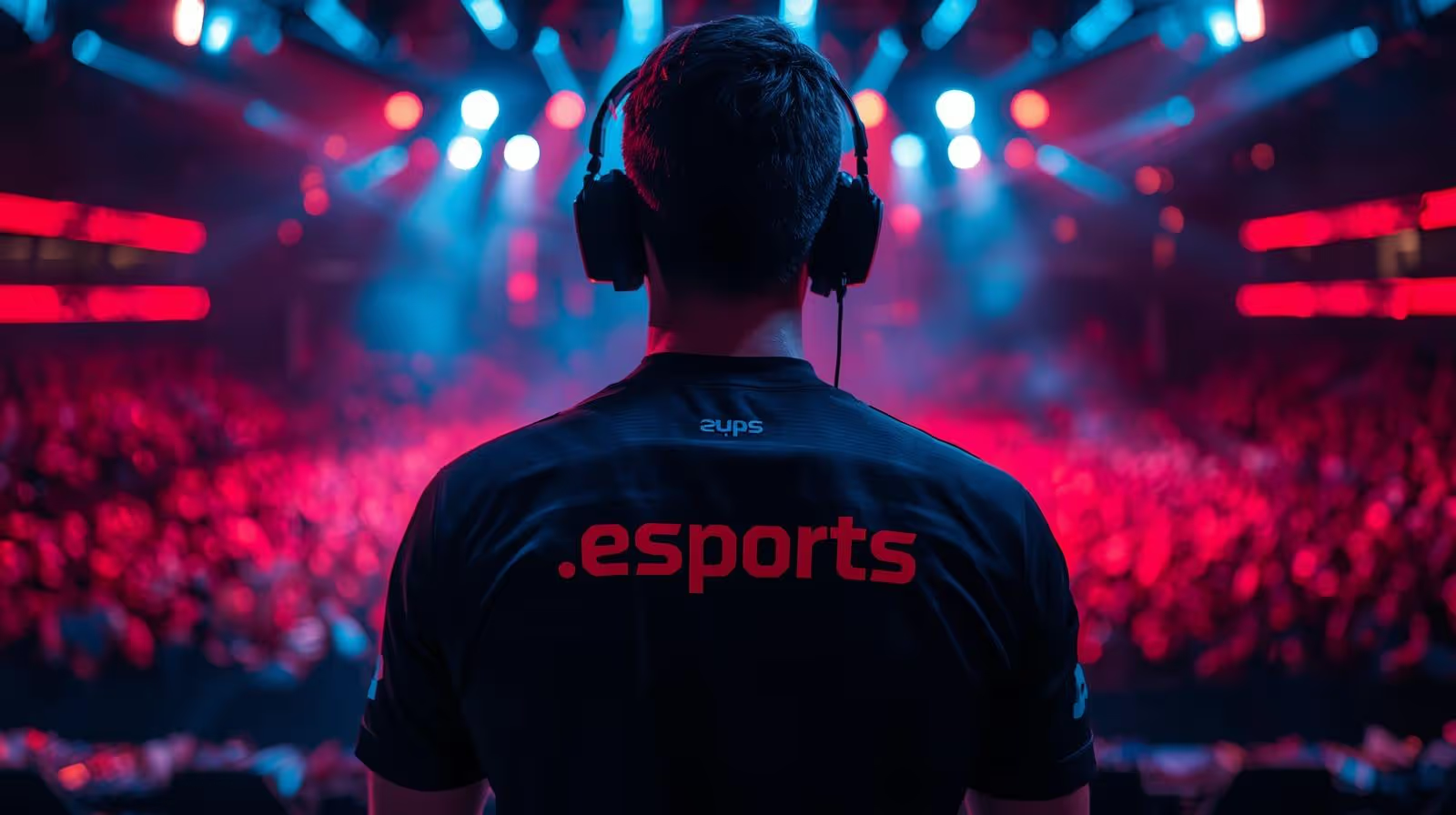
Fake ticket pages, lookalike team stores, and copycat tournament hubs keep showing up because esports URLs are still a mess. Fans bounce between link-in-bio stacks, third-party platforms, and long, hard-to-verify addresses that don't signal what's real. Sponsors and media partners face the same problem, because brand confusion costs clicks, trust, and money.
So what would it take to make an esports site feel instantly official? A big part of the answer is naming, because the best teams and cleanest words in .com are already expensive, taken, or buried under extra hyphens and add-ons. As a result, even legitimate orgs end up with "official" handles, awkward spellings, or multiple domains that split search signals.
That's why the internet needs a dedicated namespace like a .esports domain. Esports is now a global business with real revenue, real contracts, and real risk, and it needs a clear place online where identities are easier to verify and easier to remember. A focused extension also makes short names more available, which matters when a URL has to fit on jerseys, overlays, thumbnails, and venue screens.
As of February 2, 2026, .esports is available through Kooky LLC, powered by Freename, with the official page at https://kooky.domains/tld/esports. Kooky positions .esports as an onchain domain option, which can reduce renewal anxiety and make ownership easier to prove. Put simply, a cleaner naming layer won't solve every scam, but it can make the legitimate sites easier to spot and harder to impersonate.
Esports did not grow up the way traditional sports did. It grew inside browsers, apps, and social feeds, where attention moves in seconds and links do the heavy lifting. That reality breaks the old domain playbook, the one built around a single team site, a ticket portal, and a TV schedule.
As esports money and audience scale, the web address stops being a nice-to-have. It becomes part of trust, because fans and sponsors make snap calls based on what they can verify fast. A clearer naming layer, including a purpose-built option like .esports (powered by Freename, owned by Kooky, with the official page at https://kooky.domains/tld/esports), fits how this industry actually works online.
Esports market-size reports often disagree by billions, and that throws people off. The gap is less about confusion and more about definitions. Some researchers count only the "core" of esports, while others count everything that happens near it, including betting and adjacent advertising.
For example, some 2026 estimates cluster around $3.5 billion when they focus on events, sponsorship, and media. Others land closer to $5.1 billion when they pull in broader lines like advertising, consumer spend, and parts of betting. There are also projections around $4.8 billion (for 2025) that weigh betting heavily as a main driver. You can see how one question changes the number quickly: are you counting the tournament business itself, or every dollar that touches competitive gaming?
Here's the practical takeaway. Even when analysts argue about the boundaries, the industry still runs on real money flows:
As soon as meaningful money shows up, fraud follows. That is not unique to esports, but esports gets hit harder because distribution is link-based. A scammer does not need a fake storefront on a busy street, they need a convincing URL and a shareable post.
Recent fraud patterns across sports and gaming show the playbook: copycat domains, "official" store clones, and phishing pages promoted through social channels. Gaming-adjacent scams have also used large batches of lookalike domains, pushed through Discord-style promotion loops, and designed to route victims into hard-to-trace payment paths. If a fan is already primed to click fast, a slightly off URL can be enough.
That is where domains come back into the story. When the naming layer is crowded and inconsistent, squatting and lookalikes get cheaper. When the naming layer is clearer, legitimate operators get a stronger default signal, and fans get one less thing to guess at.
The market-sizing debates matter for investors, but scammers do not wait for consensus. They follow attention, and attention follows links.
Traditional sports can rely on physical anchors. The stadium is real. The broadcast channel is familiar. Even if the team's site is messy, the fan can still find the game on TV or at the gate.
Esports flips that order. Most fans meet an org, a tournament, or a creator through a clickable path first. The first touch is often a Twitch panel link, a YouTube description, a Discord invite, an X post, or a QR code flashed during a live event. In that moment, the domain is not branding fluff, it is the front door.
If you have ever watched a big match and tried to follow a sponsor promo in real time, you know the problem. The crowd is moving, the chat is flying, and the viewer does not want to decode a long URL with extra words, hyphens, or odd spellings. When attention is the currency, friction kills conversions.
A clean domain reduces friction in three ways:
.esports can tell a fan what they are about to click, before the page loads.This also affects search behavior. People often do not type full URLs. They search what they remember, then click the top result. When a brand's naming is split across multiple "official" domains, link shorteners, and platform pages, that memory gets fuzzy. Meanwhile, scammers love fuzzy, because it creates room for lookalikes to sit nearby in search results or social replies.
Ask yourself this mid-scroll: when someone posts "tickets are live" or "claim the drop," do you pause to check every character of the URL, or do you click because the moment feels urgent. That urgency is a feature of esports culture, and it is also a risk surface.
None of this suggests a domain extension alone stops fraud. It does suggest that esports, as an online-first product, benefits more than most sports from a namespace that makes legitimate destinations easier to identify and repeat.
Esports is not one kind of operator with one kind of website. It is a stack, and each layer needs a home base that feels stable. Pro orgs, tournament operators, and publishers sit near the top, but the long tail is where naming gets chaotic. That long tail is also where fans and new players enter.
A single, readable identity system helps because it reduces guesswork. When naming is consistent, people spend less time verifying and more time participating. That matters whether you are signing a sponsor deal or filling a bracket on a Tuesday night.
Consider how wide the ecosystem is, and how many different site types show up:
Pro organizations and semi-pro teams
They run official hubs for rosters, schedules, partners, and media. They also publish press kits, sponsor pages, and talent applications. For example, orgs like TSM (tsm.gg), Cloud9 (cloud9.gg), and FaZe Clan (fazeclan.com) already show how much identity work the domain has to do, especially when merch, content, and competition all live under one brand.
Tournament operators and league admins
They need pages that fans trust instantly, because these pages handle the highest-intent actions. Think registrations, rules, brackets, prize payout policies, venue info, and live result hubs. Operators like ESL (esl.com) and BLAST (blast.tv) have built strong brands, but the broader tournament scene includes hundreds of smaller events that struggle to find clean, affordable names.
Streamers and content creators
Creators often live on Twitch or YouTube, yet they still need a domain for brand deals, contact forms, business email, and a media kit. Many use link pages, which are convenient, but they also add another hop and another point of confusion. A direct domain helps fans reach the right place without bouncing through third-party pages.
Coaches, agents, and training tools
As coaching became a real category, so did the need for "boring" site pages that are still essential: pricing, session booking, credentials, testimonials, and refund policies. The same goes for analytics tools that host dashboards, match histories, and API docs. Trust matters here because users often connect accounts or share payment details.
Merch brands and partner shops
Team stores are a frequent target for copycats because the product is easy to clone and the buyer is emotional. Official shops like shop.tsm.gg and store.cloud9.gg show the pattern: fans want quick confirmation that they are buying real gear. A clearer naming convention helps, especially when limited drops create urgency.
Communities and amateur leagues
This is where esports culture stays alive between major events. Weekend teams, local LAN groups, and Discord communities spin up sites for tryouts, team rules, scrim schedules, and recruitment forms. They rarely have time to fight for a premium .com, and they also should not need to.
College programs and student clubs
Schools run varsity-style programs, intramural leagues, and scholarship announcements, often with separate pages for recruiting and eligibility rules. A consistent naming layer helps parents, students, and sponsors verify that a program is real, not a copycat page using a school logo.
What ties these groups together is the same need: one clear place to point people. You can feel the difference between "find us through this chain of links" and "go here, this is the official site." In a community that moves at clip speed, the second option wins.
Esports does not have one front door, it has thousands. The naming system should make those doors easier to label, not easier to fake.
Esports grew up on short tags, quick clicks, and fast memory. The web naming system did not. Today, the same team might use one domain for content, another for merch, and a third for tickets or drops. Meanwhile, fans try to remember what they saw on a stream overlay for three seconds.
That gap creates three problems that keep repeating: good names are hard to get, small typos send people to the wrong place, and cleaning up the mess later costs real time and money. Even when nobody acts maliciously, the scattered naming makes esports harder to verify, harder to search, and harder to explain to new fans.
Domain scarcity sounds abstract until you try to name a team. A new org wants a short, clean name that fits on a jersey and a scoreboard. The problem is that .com has been picked over for decades, and esports brands collide with each other by design.
Esports names tend to be short because the culture rewards fast recall. Team tags often sit in the three to five letter range, and those strings run into existing businesses, old hobby sites, or dormant domains. Add game titles and common esports words and the pileup gets worse. Think about how many groups want some version of:
When the name is already taken, you get a familiar set of outcomes. Some domains sit parked, which means the "site" is basically ads and a for-sale sign. Others get listed on the aftermarket at a price that makes sense for a funded startup, not for a local team trying to qualify for its first LAN. At that point, a new team has to choose between paying up or getting weird with spelling.
That's where brand growth slows down. A long or awkward domain costs you in small ways that add up: fewer people type it correctly, fewer sponsors remember it, fewer fans trust it on first glance. You can ask a fan to remember one clean address, but can you expect them to remember a misspelling plus a dash plus "official" after it, especially when they're mid-match?
There's also a quiet fairness issue. In esports, the best stories often start small. If clean naming requires big money up front, the scene tilts toward teams that can buy their way into a better front door.
A domain name isn't your brand, but it shapes how quickly people believe your brand is real.
So newer orgs end up building with friction while older orgs keep the easiest names. That is not a talent gap, it's a naming bottleneck.
Most fans don't "check the URL." They follow momentum. They see a clip, then they want the roster. They hear "tickets are live," then they want seats. They watch a jersey drop, then they want the shop. In those moments, people act from memory, and memory is fragile.
Here's a realistic path that happens all the time. A fan sees a team link once, maybe on a stream panel or in a creator bio. Later, they type what they remember. They're not trying to be careless, they're just moving fast. One extra letter, one missing letter, or a swapped character can land them somewhere else.
That "somewhere else" might be harmless, like a parked page or a dead site. It also might look convincing enough to fool a quick glance. Scammers often copy layouts and logos because the goal is not to build a great site, it's to win a split-second decision. If the page loads fast and looks familiar, people continue.
The most common risk patterns are boring, which is why they work:
This is not fear talk, it's the same playbook used across online shopping and event sales. The gaming space sees it too, because people chase mods, drops, and perks, and scammers know that urgency beats caution. Even mainstream examples show how small the change can be. One well-known trick is adding a single letter to a popular domain (an extra "n," for example) so the address looks right at a glance.
Esports naming makes this easier because fans already expect variation. One org uses .gg. Another uses .tv. Another uses .com for content and a different domain for merch. So when a fan sees a different ending, their brain often shrugs and says, "Yeah, that tracks." The clutter trains people not to treat a domain ending as a trust signal.
What gets lost is the simple mental model fans want: "This is the official place." When the official place keeps moving, a fake place has room to move in too.
Teams do have options when someone grabs a domain that matches their name. The catch is that enforcement is still a process, and processes take time. In esports, time is a cost because seasons move fast, rosters change fast, and public attention shifts in a week.
One of the main tools is the UDRP, short for the Uniform Domain-Name Dispute-Resolution Policy. At a high level, it's a faster dispute process used to challenge domains that copy a trademark in bad faith. Instead of a full court case, you file a complaint, present evidence, and a panel decides whether the domain should be transferred.
UDRP can work, and esports orgs have used it. A well-known example is FaZe Clan, which won a UDRP case in 2017 involving fazeclan.com, described as a parked site with competitor links. Another example from recent years involves Score Media and Gaming Inc., which succeeded in a UDRP action over thescoreleague.com after a site copied content and pushed sign-ups. These are not edge cases. They're what happens when a brand becomes valuable enough that someone else wants traffic from the name.
Still, "winning later" doesn't erase the damage done now. Even in a clean case, the org has to:
Meanwhile, the team still needs a working link for merch, tickets, or recruiting. So it publishes an alternate domain, fans learn that one, and the naming splits again. Later, when the org recovers the domain, it has to migrate, redirect, and re-teach the audience. That whiplash costs trust, and it also costs search momentum.
There's another angle people miss. A dispute can be stressful even when you're right, because you're spending attention on defense instead of growth. If you're a small org, that hit is bigger. You might not have in-house counsel. You might not have time to fight while running tryouts, content, and partnerships.
Also, enforcement has limits. If the name is generic, or if the bad actor keeps changing the domain, you end up playing cleanup. You can swat one copy, but can you stop the next one that appears tomorrow with a different ending?
The practical point is simple: dispute systems help, but they are a tax. In a space where attention is scarce, the tax hurts.
Discovery has changed. Fans still type team names into Google, but they also use TikTok search, YouTube search, and in-app browsers. On top of that, many people now ask AI assistants for "the official site," "the roster," or "where to buy tickets." Those systems don't guess based on vibes, they guess based on signals.
Cluttered naming weakens those signals.
When a team uses multiple domains, plus link shorteners, plus platform pages, it creates a messy trail. Search engines and recommendation systems can usually sort it out over time, but the friction shows up in the moments that matter. A new fan searches during a live event, and the results show a mix of old pages, third-party sellers, and lookalikes. A sponsor's intern tries to find the press kit, and they land on the wrong contact form. A parent checks whether a youth tournament is legit, and they see three "official" pages that disagree.
Entity clarity matters too. Esports is full of names that overlap: a team tag that matches a player nickname, a tournament series that matches a Discord server, a coach brand that matches a training tool. If everything sits on different extensions with inconsistent patterns, machines have a harder time connecting the dots. Humans do too.
You can see the same issue in social search. TikTok and YouTube often reward what's popular and recent. That's fine for clips, but it can be rough for verification. If a fake merch page runs aggressive promos, it may show up in more places than the quiet official page, at least for a while. Nobody needs a conspiracy for that to happen. The systems follow engagement, and scammers design for engagement.
So what does "clarity" look like in practice? It usually means one consistent pattern that you repeat across touchpoints:
Once you have that, machines get better at ranking the right site, and fans get better at spotting the wrong one. People learn the shape of your official link. Then when they see a weird variation, it feels off.
This is where a dedicated namespace helps, because it reduces the need for awkward workarounds. If esports had more consistent, purpose-fit naming, fewer orgs would need to stitch together identity across .com and scattered extensions. Over time, that consistency becomes a trust habit.
A final point is about memory. Fans remember what they can say out loud. If your URL reads clean on a stream and sounds clean in a podcast, it sticks. That is good for search, good for shares, and good for AI answers, because the same words keep showing up in the same order.
If the goal is for fans to quickly find the real destination, the internet should make that easier, not harder. That's the argument for a clearer naming home for the industry, including options like .esports (powered by Freename, owned by Kooky, with the official page at https://kooky.domains/tld/esports), because predictability is what trust runs on.
Esports has a naming problem that spills into everything else. Fans want one obvious link, sponsors want brand safety, and parents want to know a site is real. Yet the industry still lives across scattered domains, link shorteners, and "official" tags that teach people to ignore warning signs.
A dedicated .esports domain gives the web a simple sorting system. It doesn't replace good security or good policies, but it makes the internet easier to read at a glance. When the address itself says "this is esports," the whole ecosystem gets less noisy, less confusing, and harder to fake.
A good domain works like a label on a folder. You don't need to open it to know what's inside. That's the immediate value of names like team.esports or tickets.esports. The meaning is obvious, even if you've never heard of the brand before, because the ending does part of the explaining.
That matters because esports isn't only for insiders anymore. New fans show up through clips, schools build programs, and families try to make sense of a scene that moves quickly. When a parent sees a link for a youth tournament, do they know which org names are legit, or do they rely on whatever looks "close enough" on a phone screen? A clear .esports ending reduces that guesswork.
It also helps sponsors and partners move faster. Brand teams often do quick checks before they approve a link for a campaign. A domain that clearly matches the category makes those checks easier, especially when a sponsor supports multiple teams and events at once. The same goes for schools and clubs that need to share a single trusted link in an email, a PDF, or a permission slip.
You can see how it plays out in everyday situations:
tryouts.esports on a flyer, students know what to expect before they scan.tickets.esports, buyers get a clear signal that the page is meant for event access, not a random storefront.team.esports for its hub, while keeping subpages for roster, schedule, and partners in one place.When a URL reads like plain English, people click with more confidence, and they hesitate on links that don't fit the pattern.
Even the simplest clarity helps search behavior. Fans often don't type the full address. They search what they remember. A clean, on-topic ending makes it easier to recall and easier to say out loud on a stream. In a space built on fast decisions, that tiny boost in comprehension reduces the number of wrong clicks.
Most naming mess starts with scarcity. When the clean name is gone in .com, teams and events start adding patches: extra words, extra characters, and "official" labels that look defensive. Those compromises create two problems at once. First, real brands become harder to remember. Second, fake brands get more room to hide.
A fresher namespace like .esports increases the odds that normal names are still open. That reduces the pressure to register awkward variations, and it nudges the industry toward consistent naming. If you can get the name you actually want, you don't need to explain why the URL has a number, a dash, or a forced add-on.
The simplest patterns are also the cleanest:
org.esports for the primary brandacademy.esports for development rosters and trainingfinals.esports for a specific championship hubcityname.esports for local clubs, LAN groups, and venuesThose examples aren't about perfection, they're about less clutter. A cleaner pool of names can also reduce the incentive for lookalikes. Scammers thrive when official naming feels inconsistent. If one team uses a short .gg, another uses a long .com, and a third uses a different domain for tickets, fans learn a bad habit: "Anything could be official."
By contrast, when brands can claim straightforward .esports names, you get fewer of these common failure modes:
There's also a long-term brand benefit here. Esports teams change sponsors, rosters, and sometimes even game focus. A name that stays readable through those shifts becomes an asset. Instead of building around a workaround URL, teams can build around a stable name that still looks right five years later.
As of February 2026, .esports remains available through Kooky LLC, powered by Freename, with the official page at https://kooky.domains/tld/esports. The practical effect of lower crowding is simple: more clean names remain possible, which means fewer compromises that make the web harder to trust.
People often ask for "an esports directory," but directories come with baggage. Someone has to run it, rank it, and decide who gets featured. That quickly turns into a power center, and the industry doesn't need another gatekeeper.
A shared domain ending offers a lighter alternative. The extension itself becomes a common signpost. It doesn't require one company to curate the space, because the structure comes from how people use names. Over time, the ecosystem can cluster in a way that feels natural.
Think about how people already navigate other categories online. Certain endings signal purpose, and visitors adjust their expectations. A dedicated .esports space can do the same, not by force, but by repetition. When enough reputable teams, tournaments, and tools live there, the extension becomes a shortcut for discovery.
That helps in a few concrete ways:
Fans benefit because it reduces search friction. If you know an event uses .esports, you have a stronger guess for where the official site lives. Media partners benefit because they can verify sources faster when they pull logos, press kits, and contact info. Tool makers benefit because integrations and API docs feel easier to find and easier to share.
Competition doesn't go away, but it gets cleaner. Two rival leagues can both use .esports and still keep their identities separate. In fact, the shared ending can increase trust even among competitors, because it creates a consistent "this belongs to esports" marker. The web becomes more legible, like street signs that use the same shape and color even when the stores compete.
A small but important side effect is how this impacts impersonation. When legitimate sites gather under a clearer naming convention, the odd links stand out. A fake ticket page that sits outside the familiar pattern feels off sooner. That doesn't stop every scam, but it changes the odds at the moment of decision.
You don't need a single official directory when the naming system itself points people in the right direction.
Over time, that shared signpost can help the industry feel more organized without central control. It's a boring benefit, which is why it's powerful.
Esports identity isn't built like a local business. It's built like a set of moving parts: player handles, team tags, rotating rosters, and cross-game communities that shift with the meta. One week the story is a roster move, the next week it's a new sponsor drop, and then a team expands into a different title. Social profiles change quickly because the culture rewards speed.
That speed creates a stability problem. Social platforms are great for reach, but they are not a permanent anchor. Handles get taken, accounts get locked, and algorithms bury posts. Even when everything goes right, a team still ends up with a dozen "homes," each optimized for a different format.
A dedicated domain solves one simple job: it gives you a fixed address. It's the place you point to when everything else changes. So when your roster graphic goes viral and a million people want the real link, you don't want a chain of redirects and third-party link pages. You want one clear home.
A stable .esports domain fits the way brands operate across games and regions:
This matters for trust because esports runs on quick moments. A QR code flashes on a stage screen, or a caster says the URL once. If the address looks clean and category-correct, people follow it. If it looks improvised, people hesitate, or worse, they click the wrong copycat.
A .esports name also works well as a long-term anchor for brand messaging. You can keep changing your content strategy and still keep one stable link for:
In other words, esports already moves at internet speed, and the naming layer should match that reality. When the domain system helps the audience understand what they're about to click, the whole industry feels less chaotic and more trustworthy.
Most esports domains today feel like leases. You rent the name, you pay renewals, and you follow rules that can change. The new .esports option shifts that mental model. It treats the domain less like a subscription and more like property, where ownership is meant to be provable and long-lasting.
That difference matters because esports brands move fast, while trust moves slow. Teams rebuild rosters, creators change platforms, and tournament operators spin up new events weekly. Yet the URL fans remember needs to stay stable, or you end up training your audience to click whatever looks close. With .esports, the pitch is simple: clearer naming for the industry, plus a different ownership structure that can reduce renewal stress and make control easier to show.
At the same time, it's still a domain you will use in the real world, with real people, real staff turnover, and real scammers trying to ride your hype. So the smart approach is to understand what's new here, what stays the same, and what choices you need to make before you put it on jerseys, overlays, and sponsor decks.
Start with the basics, because this is where many teams get burned. A domain can look official in a social post and still be sold through a confusing flow, or attached to terms you never read. So before you buy anything, make sure you're looking at the right operator and the right info source.
As of February 2026, .esports is owned by Kooky LLC and powered by Freename. The official information page is here: https://kooky.domains/tld/esports. If you're comparing pricing, features, or purchase steps, treat that page as the reference point, not screenshots on social or a reseller's highlight reel.
Verification is not only about avoiding scams. It's also about avoiding internal mistakes. If a staffer buys a domain with the wrong account, or accepts terms without review, you can create a mess that takes months to unwind.
A simple way to keep the purchase clean is to set a pre-buy checklist and stick to it. You don't need a legal team for this, you need discipline.
Treat your domain purchase like signing a venue contract. If you wouldn't approve a venue from a DM, don't approve a domain that way either.
One more point tends to get missed: many teams confuse "powered by" with "owned by." Ownership tells you who ultimately controls the TLD, while the powering partner often reflects the underlying platform and tooling. Both matter. Ownership affects long-term policy direction, while the platform affects how you manage and use the name day to day.
If you're about to announce a switch, ask a blunt question early, not as a last-minute panic: who can prove ownership in writing if a sponsor or platform asks for verification next month? Build your process around that reality.
When people hear "onchain," they often expect a technical rabbit hole. You don't need that to make a good decision. What matters is the ownership model and the practical impact on control.
In plain English, an onchain domain is typically stored in your wallet like an asset. Instead of your "ownership" mainly living as an entry in a registrar's database tied to an email login, the record of control is associated with the wallet that holds it. That changes the feel of ownership because it can be easier to demonstrate that you control the asset, and harder for a random password reset to hand it to someone else.
Another headline difference is no yearly renewal for the .esports model described by Kooky. Traditional domains often feel cheap upfront, then become a permanent bill. Miss the renewal and you can lose the name, sometimes quickly, sometimes after a grace period. In esports, where staff changes and inboxes die, renewal risk is not theoretical. It's a recurring "oops" waiting to happen.
With a pay-once model, the question shifts from "did we renew?" to "did we manage ownership correctly?" That can be an upgrade, but it also moves responsibility onto your internal controls.
So what do you actually own here? At a high level:
Where does it live? Again, keep it simple: it lives in your wallet, not just in a registrar account. If your org has never used a wallet for anything, that's the first operational change you need to plan for, even before you think about marketing.
How do you use it? Most teams care about three real-world outcomes, and you should set expectations carefully.
First, teams want the domain to function as a front door, meaning it points people to the right place quickly. That can include basic website hosting or a redirect to an existing site. Second, teams want a domain to strengthen identity, so it's easier to say "this is the official link" in a crowded feed. Third, teams want the domain to be compatible with future tooling that may make naming, verification, and link management easier over time.
The key is to avoid promising yourself features you haven't confirmed. A domain is not automatically a website, and it is not automatically an email system. It is a name and a control layer. Everything else depends on what services you connect to it and what tools the operator supports.
Here's a practical way to think about it. A traditional domain is like renting a retail space in a mall. You pay every year, the mall has rules, and you can lose the unit if you miss a payment. An onchain domain is closer to owning the unit, but you also become responsible for the keys and the security alarms. Which sounds better for your team right now, and do you have the operational maturity to handle it?
If you want a clean starting plan, aim for boring and reliable:
.esports as your official hub domain for public-facing links.That rollout matters because the domain only helps if people see it enough times to learn it. Repetition is the point. Still, repetition without clarity can backfire. If you swap links every month, fans stop trusting any of them.
A domain is a sign on the building. If you keep moving the building, the sign won't save you.
Finally, consider how this affects negotiations. Sponsors and event partners often want proof you control the brand's main link. With an onchain asset, you may be able to prove control in a more direct way, but you also may need to explain the model to non-crypto stakeholders. Plan for that conversation upfront, in plain language, not jargon.
A better domain can improve trust, but it's not a shield. The internet doesn't hand out safety because you picked the right extension. What a strong name does is reduce confusion and tighten your public signals, so fewer people fall into the cracks.
Where .esports can help is the simplest place: pattern recognition. Fans don't run security checks. They notice shapes. A clear domain like brand.esports can be easier to recognize than a long .com workaround. It also reads well on screen, which matters because many esports clicks come from overlays, QR codes, and short-lived posts.
That clarity has real downstream effects:
It also helps media and partners. When a reporter needs the right roster page fast, a predictable domain lowers the chance they cite a fake page or a stale wiki. When a sponsor's compliance team checks brand usage, a category-fit domain can speed up basic verification.
Still, security is a system, not a purchase. A domain does not stop:
If someone wants to scam your fans, they can still register a lookalike name somewhere else and copy your design. They can still buy traffic. They can still show up in replies during a hype moment. The domain helps your audience by giving them one "north star" link, but your team still needs to protect that link and teach fans to use it.
Non-technical habits matter more than most teams admit. If you want .esports to raise trust, pair it with a few consistent practices:
There is also an internal security angle. If the domain is controlled through a wallet, the biggest risk may not be hackers, it may be internal confusion. Who holds the keys? Where are backups stored? What happens if the person who set it up leaves mid-season?
Ask a hard question early: if your GM got locked out tonight, could the org recover control tomorrow without drama? If the answer is "maybe," you don't have a domain plan yet, you have a hope.
Balanced expectations keep you safe. The domain can help fans make better snap judgments, and snap judgments are where many scams win. But you still need the basics, like secure accounts, clear comms, and a single source of truth for official links.
Switching domains sounds like a branding task. In practice, it's closer to changing the locks while your store stays open. If you rush, you break revenue paths, confuse fans, and create openings for impersonators. If you plan it, you gain a cleaner identity without losing what you already built.
Start with brand protection. A .esports name can become your flagship, but it shouldn't be your only asset. Teams with real audiences usually take a layered approach. They keep the familiar domain they already own, then add the new one as a clear, category-fit front door.
In other words, you don't need to "abandon" your .com to benefit from .esports. Many orgs will be better off keeping both, then choosing clear roles.
A practical split often looks like this:
.esports as the public-facing official hub you promote everywhere..com (or existing domain) as a backup, redirect target, or legacy anchor.Redirects sound easy, yet they're where many teams create accidental chaos. If you change URLs for shop, tickets, and announcements all at once, you can break links in old posts, partner pages, and creator bios. Then support tickets spike, and fans blame you, not the scammer.
Instead, plan your rollout like a tournament schedule, with stages and checkpoints. Move the highest-trust pages first, then monitor.
Here are the main choices to think through, with esports-specific realities in mind.
Brand protection strategy
If you're serious about .esports, consider what you need to protect around it. That can include your team name, common misspellings, and event series names. You do not need to buy everything, but you should decide what level of coverage matches your risk. A top team with merch drops faces different threats than a local LAN group.
Keeping the .com
Even if .esports becomes the main link, the .com still has value. Fans type it out of habit. Partners may assume it exists. Also, older articles and videos will keep sending traffic for years. Keeping it prevents someone else from picking it up later and confusing your audience.
Redirect plan and link hygiene
Redirects should be stable and tested. Before you announce a new domain, audit where your links already live. That includes stream panels, Discord servers, old YouTube descriptions, sponsor pages, and QR codes printed on physical items. What happens if a fan scans a 12-month-old jersey QR code and lands on a dead page?
Staff access and role control
Wallet-based ownership can be clean, but only if access is designed for a team, not a single person. Define who can approve changes, who can execute them, and who can view records. If you've ever had a social account password lost in a staff handoff, you already know why this matters.
Wallet management and recovery
This is the operational heart of the onchain model. Decide where the wallet lives, who controls it, and how recovery works. If you use a single person's wallet, you create key-person risk. If you use a shared setup, you need process. Either way, write it down so you're not guessing during a crisis.
Roster changes and contractor access
Esports churn is constant. Players join, players leave, editors come and go, and agencies rotate staff. Don't give contractors ownership-level control just because they are "handling web stuff." Instead, design a permission model where contractors can work without holding the keys to the building.
This becomes even more important during a roster scandal or public dispute. If a departing staffer has access to core assets, they can cause damage fast, even without hacking anything. Tight controls keep drama from becoming downtime.
A simple policy can prevent most problems: ownership keys stay with the org, while day-to-day publishing stays with accounts you can revoke. That separation is normal in mature companies, and esports teams benefit from it more than they expect.
One last risk deserves attention: messaging. When you switch domains, scammers sometimes copy your announcement and reply with fake "updated links." That happens because fans trust your tone and branding, not because they studied the URL. So when you announce your .esports domain, repeat it consistently, show it on stream, and pin it in places where fans already look. The goal is to make the real link boringly familiar.
If you treat .esports as a long-term identity asset, not a quick rebrand, you'll make better choices. The upside is real, clearer naming, less renewal pressure, and a more stable home for official links. The work is also real, because long-term control depends on how well your team manages access, recovery, and communication.
A new domain only helps if it doesn't break the path fans already use. That is the core fear, because esports traffic is fragile. It spikes during roster news, playoffs, drops, and ticket releases, then it fades. If you change links at the wrong time, you don't just lose clicks, you train people to doubt the next link.
The safest approach is simple: keep what already works, then introduce .esports as the official place you repeat everywhere. Over time, the audience learns one clean destination, while your older domain keeps catching legacy traffic from search, old videos, and old posts.
As of February 2026, .esports is available through Kooky LLC, powered by Freename, with the official TLD page at https://kooky.domains/tld/esports. The rollout details below stay the same no matter what registrar flow you use, because the web basics still apply. Fans click what they recognize, and search rewards what stays consistent.
Treat a domain change like a jersey refresh mid-season. You can do it, but you can't surprise people the week of finals. Timing matters, because esports has calendar gravity. Majors, playoffs, open qualifiers, and merch drops all create high-intent traffic that you don't want to interrupt.
Start with a plan that protects your existing links and gives .esports a clear job.
nova.esports and consider one common misspelling if you see it often in chat. You don't need to collect every variation on day one, but you do want to prevent the easiest mistake..esports will be on day one..esports, while key pages on the old domain keep working for a transition period. That way, old QR codes and old YouTube links still resolve.A calm timeline helps. Many orgs do best with a two-phase season plan: introduce the .esports hub during the off-season or early regular season, then make it the headline link right after a major event ends. That way, you aren't changing the address while the audience is sprinting.
If you want to keep traffic, don't force fans to relearn everything at once. Give them one new "north star" link, then keep the old roads open.
Finally, measure the move like a business change, not a vibe. Track branded search clicks, referral traffic from social, and conversion on high-intent pages (shop, tickets, sign-ups). If support asks "Where do I buy merch?" more than usual, your rollout needs clearer signposting, not more domains.
Esports audiences don't read links, they recognize shapes. The cleanest win with .esports is to create a naming system that feels obvious, then repeat it until it sticks. That reduces wrong clicks, support messages, and partner confusion.
A strong pattern looks like street signs in the same city. Each sign uses the same style, so people stop second-guessing. You can get that effect with short, plain domains and predictable subpages.
Here are naming patterns that tend to work well, because they map to common fan intent:
org.esports for the official hub and announcementsshop.esports for merch and dropstickets.esports for ticket sales and venue inforoster.esports for the current roster, staff, and rolespress.esports for media kits, logos, and contactrules.esports for tournament rules, eligibility, and formatsYou can also keep everything under one domain and still use the same mental model with short paths, like org.esports/shop and org.esports/tickets. Either approach can work. The key is that fans should predict the link before you say it.
Consistency also reduces internal chaos. When a staffer posts a new graphic, they shouldn't ask, "Which domain do we use this week?" Give them a rule they can follow without thinking. For example: "All public calls-to-action use .esports unless legal says otherwise."
This matters even more for partners. Sponsors, venues, and broadcast teams often build lower-thirds, promo cards, and landing pages on tight timelines. If your naming is inconsistent, they guess. Guessing creates errors, and errors create lost money.
A practical way to pressure-test your pattern is to ask three questions during planning, and answer them in one sentence each:
If those answers point to different, messy URLs, support tickets follow. If those answers point to a small set of predictable .esports destinations, the questions drop.
Besides reducing support, clean patterns make your content easier to share on stream. A caster can say "tickets dot esports" and viewers understand it. A creator can flash "press dot esports" on a sponsorship page and avoid sending brands through DMs. Even your own staff benefits, because onboarding becomes simple.
The best naming system is the one your community can guess correctly, even when they're distracted.
Don't overbuild, though. Five to eight destinations is enough for most brands. If you create 30 different domains, you recreate the same confusion you tried to fix. Keep the system small, then expand only when a new link answers a repeat question.
Brand protection can sound like a legal project, but most of it is just common sense and cost control. Your goal is not to own every possible domain on earth. Your goal is to block the easiest impersonation routes that steal your time and your fans' money.
Start by thinking like a scammer. They don't need a perfect copy, they need a link that looks right in a fast scroll. That usually means common variations, not clever ones.
Focus your defensive registrations on a short list:
dragon.esports and dragons.esportsnv.esports and novateam.esportsnovaesports.esports only if it shows up oftennovaval.esports, novacs.esports, novalol.esportsKeep it practical. If you never run ticketed events, you don't need to buy ten "tickets" variations. On the other hand, if you sell merch and do limited drops, copycat stores are a real risk. Spend where the money and urgency are.
Cost control is easier when you set tiers.
This is also where you protect people from internal confusion. Many orgs lose domains the boring way, not the dramatic way. Someone buys the domain on a personal account, then leaves. Someone forgets where the login is. Someone shares access in a Discord DM, then can't unwind it later.
If your .esports ownership uses a wallet-based model, write down who controls the wallet, who can approve transfers, and what happens if that person is unavailable during a major event. You're not planning for a spy movie, you're planning for real life, like a phone lost on travel day.
One more habit helps: watch your own community language. If fans commonly shorten your name in a specific way, that shortened form becomes an impersonation magnet. If chat calls you "NovaGG," that string matters. If people nickname your league "Winter Cup," that phrase matters. Your defensive list should mirror what people actually type, because that is where fake traffic comes from.
This isn't legal advice, and it doesn't need to be. It's basic risk math. Protect the names that match your revenue and your attention spikes, then move on.
Esports doesn't live inside a browser tab. It lives on jerseys, posters, stage LEDs, stream overlays, and arena screens that fans glance at for seconds. In those moments, a domain needs to be short, readable, and hard to misread.
That is where .esports can earn its keep. A clean address increases offline-to-online conversion because it reduces friction at the exact point where attention is scarce.
Think about the common places fans see links:
Posters and flyers are one. If you run local qualifiers, college events, or LAN nights, you already know the problem. The URL has to fit next to date, venue, and rules. A short domain like tickets.esports or rules.esports stays legible at a distance. Meanwhile, a long URL with extra words becomes visual noise.
Jerseys and merch tags are another. Many teams put a URL on a sleeve patch or on a hang tag, but the link rarely gets typed. Fans use their phone camera, or they remember only the ending. A domain that reads like the category helps memory, because it sounds like what it is. If a hoodie tag says shop.esports, that is hard to misunderstand.
Stream overlays and broadcast lower-thirds may be the best use case. The link often appears for three to five seconds. If viewers miss one character, they end up in search, and search can be a minefield during high-hype moments. A clear .esports name reduces the chance they guess wrong. It also makes the "official" link feel official without adding the word "official" everywhere, which scammers love to copy.
Sponsor campaigns benefit, too, because sponsors want attribution. If your partner runs a promo code, they want a clean landing page that matches the ad creative. A short domain helps here because it keeps the call-to-action tight:
brand.esports/partner in large type.QR codes deserve a special note. Many people scan first and ask questions later, so the preview URL matters. If the URL shown by the camera app looks clean and expected, more people complete the scan. If it looks like a link shortener, people hesitate. That hesitation can kill conversions during live events.
To make offline use safer, keep the destination simple. Don't send QR scans to a deep page that changes every week. Instead, send them to one stable hub, then rotate the content on that page. Your printed items last longer than your campaign calendar.
Also, plan for the "old merch" problem. Jerseys and posters don't disappear when a season ends. Years later, someone will still scan that QR code. If it breaks, you lose trust. If it redirects cleanly to your official .esports hub, you keep the relationship.
The best part is that these offline wins don't require you to abandon your current domain. You can keep your existing site structure, keep your SEO equity, and still put .esports where it matters most, on the surfaces fans actually see.
Esports is already a serious business, but its naming layer still looks like a patchwork. Fans jump from link hubs to third-party stores, then to long URLs that don't signal what's real. That mess creates room for copycats, hurts sponsor confidence, and makes discovery harder than it should be, especially when people make snap choices during drops, ticket releases, and live matches.
A dedicated .esports space gives the internet a clearer way to label official destinations. It won't replace security basics or good moderation, yet it does make identity easier to read at a glance. Cleaner names also mean fewer forced spellings and fewer "official" workarounds that scammers love to mimic. Just as important, consistent naming helps search, social discovery, and AI answers point to the right place more often.
The key facts are straightforward. The .esports TLD launched on February 2, 2026. It is owned by Kooky LLC, powered by Freename, and the official reference page is https://kooky.domains/tld/esports. That single source matters, because it gives teams and partners a clean way to verify what they are buying and where it comes from. If your fans can't tell the real link in two seconds, how can you expect them to avoid the fake one?
Next step, keep it practical. Audit the domains you already use, decide on one naming plan (hub, shop, tickets, press), then secure the .esports name that matches your brand, before someone else trains your audience on the wrong address.