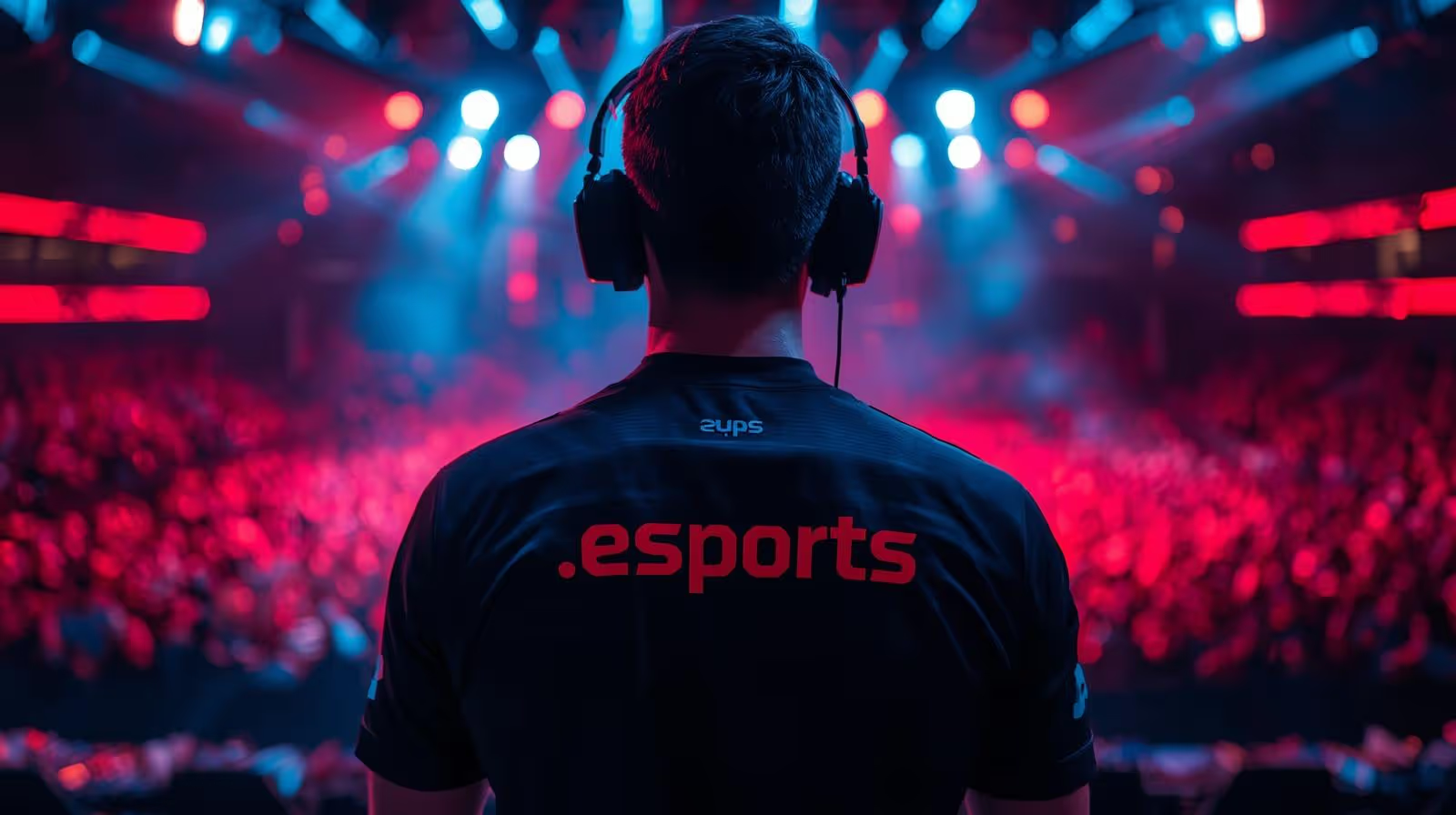
Esports used to be simple: a nickname on a scoreboard, a clan tag in brackets, and maybe a brag in an IRC chat. Now that same name can carry sponsorships, fan loyalty, and a career that follows you across games and platforms. The history of online identity in competitive gaming is really the story of how players went from anonymous to accountable, and from hobbyists to public figures.
For this article, "online identity" means the full bundle people recognize and search for, your handle, avatar, public stats, linked social accounts, reputation, and the official links that prove it's really you. It's also what teams, league admins, and brands use when they decide who gets a slot, a contract, or a second chance. If your handle is your resume, what happens when you can't easily change it without losing years of trust?
The timeline starts in the 1990s, when IRC channels and early online shooters helped players coordinate matches and build clans, often marked by short tags attached to names. In the 2000s, esports got more organized, with league ladders, player profiles, and team websites that tracked wins, ranks, and rosters in one place. Identity began to look less like a joke name and more like a record.
Then the 2010s turned visibility into a job, as Twitch, YouTube, and social media made handles searchable, clips shareable, and personalities marketable. By the 2020s, creator-style branding became normal, with Discord communities, consistent visuals across platforms, and official sites that tie everything together. That shift changed the stakes, because in esports, your name doesn't just label you, it can pay you.
In the 1990s, your esports identity was mostly a name you typed and a story other people repeated. There were no verified accounts, no unified profiles, and no easy way to prove you were the real person behind a handle. So players built trust the hard way, by showing up, playing well, and getting remembered.
That made identity feel fragile. If someone copied your nickname, you could lose credit fast. If you disappeared for a month, people forgot. Still, those early scenes built strong social rules. They turned a simple handle into a reputation that could open doors to clans, scrims, and LAN invites.
IRC channels and message boards acted like the group chat, the tryout room, and the rumor mill all at once. If you played Doom (1993) or Quake (1996), you likely learned match times and server details from people, not from an in-game scheduler. Players gathered in topic-based channels (for example, QuakeWorld communities) and on basic forums where threads moved fast and receipts mattered.
Tryouts were often informal, but still serious. A clan might ask you to join a private server for a few games, then judge you on aim, movement, and attitude. After that came scrims, which were practice matches against other clans. Because there were fewer automated systems, the community itself did the tracking. People remembered who showed up on time, who rage quit, and who always "lagged" right when losing.
Trash talk also shaped identity. It sounds immature now, but it served a purpose. If you could keep your cool while someone typed nonsense in all caps, you looked battle-tested. If you talked big and played small, your name turned into a joke that followed you between channels.
Clan tags became the glue. A short tag in brackets or before a name signaled "I'm with these people," and that association carried weight. The tag also helped solve a real problem: names were easy to copy, and many games did not protect handles well. Consistency mattered because it made you searchable in a world that did not have search.
A few habits from that era acted like early brand strategy, even if nobody called it that:
In the 1990s, "identity" was mostly community memory, plus whatever screenshots you saved before they disappeared into an old hard drive.
It also explains why drama hit so hard. If someone accused you of cheating or faking results, the damage spread through whispers and forum posts. Without official profiles, your defense was social, your friends vouched for you, your screenshots helped, and your play in the next scrim did the rest.
Blizzard's Battle.net era nudged esports identity from pure word-of-mouth into something you could point at. Battle.net launched on December 31, 1996, and from the start it gave players a shared space for chat and matchmaking. Even when the service was simple, it connected your handle to repeat games against real opponents, night after night.
Then StarCraft arrived in March 1998, and competitive habits snapped into place. The StarCraft beta went live on Battle.net on January 5, 1998, and Blizzard added features that made status visible, including ladder rankings and better ways to filter games. Suddenly, it was not just "I heard this player is good." You could see patterns over time through wins, losses, and where someone sat on the ladder.
That changed how people talked about skill. Instead of vague hype, players used ladder standing as shorthand. A recognizable handle in a chat room meant more when it matched a track record. Even if ladders were not perfect, they made identity harder to fake for long. You could not talk your way into respect forever if your record stayed average.
This is where "handle recognition" starts to feel modern. A name became a long-running file folder:
Organized scenes also grew faster when rankings existed. It is easier to run tournaments and leagues when you can scout talent from a public ladder and recruit based on results. Meanwhile, StarCraft's competitive popularity helped push structured play in places like South Korea, where the game's culture and visibility helped formalize what "being known" could mean. The key point is simple: once a system measures performance, identity becomes less about stories and more about history.
A ladder did not just rank players, it gave a community a shared scoreboard to argue over.
Even the flaws mattered. Early Battle.net had well-known cheating problems in some contexts, especially when clients handled too much locally. That pushed communities to care about repeat performance and trusted opponents. In other words, numbers helped, but reputation still filled the gaps.
Online reputation got real when players met in person. LAN tournaments and local scenes took anonymous handles and attached them to faces, voices, and body language. Once you watched someone play three feet away, excuses got harder. Was that player really as calm as they sounded online, or did they slam the desk after every death?
Big moments in the late 1990s showed how fast this could scale. The Quake Red Annihilation tournament in 1997 pulled more than 2,000 players into online qualifiers, then sent the top 16 to a live final in Atlanta during the Electronic Entertainment Expo. Dennis Fong (Thresh) won the event, and the prize, John Carmack's 1987 Ferrari 328 GTS, turned a nickname into mainstream buzz. That is a direct line from handle to headline.
Leagues and events also started adding structure. The Cyberathlete Professional League (CPL) began in 1997 and helped turn scattered competition into a more official circuit. QuakeCon began in 1999 as an id Software event for Quake fans, mixing community energy with tournament play. The common thread was simple: showing up mattered, and being seen made your identity stick.
LANs changed identity in a few practical ways:
First, teams looked like teams. Jerseys were often DIY, but even a matching shirt or logo on a printout made a clan feel legitimate. Second, your name-to-face connection created accountability. If you were a constant trash talker online, you still had to walk into the venue and sit down. That social pressure cleaned up behavior for some players and intensified rivalries for others.
Coverage, even in early forms, helped archive identity. Full-on shoutcasting was rare compared to today, but events had announcers, crowd reactions, and written match reports that spread through fan sites and forums. Photos of cramped rooms, CRT monitors, and cable piles did more than show vibes. They acted as proof that these people and teams existed, right there, at that time.
Early fan pages (often on simple personal sites) started collecting the basics: rosters, results, and brag-worthy stories. That was the beginning of an esports paper trail. Once your handle appeared in a match report, it could get linked, copied, and remembered long after the event ended. In a decade that lacked easy video sharing, that kind of documentation was everything.
The 1990s identity formula was rough, but it worked: play often, keep your name consistent, join a crew, and give people a reason to remember you. When LANs arrived, the community stopped picturing a mystery opponent and started recognizing an actual person behind the handle.
The 2000s pushed esports identity out of private servers and into public archives. Instead of relying on forum posts and word-of-mouth, players started leaving trails that anyone could check, league pages, team rosters, and platform accounts that stayed the same across games.
That shift changed the stakes. When results live on a league site, your handle becomes easier to trust, and harder to hide behind. At the same time, teams and sponsors began treating a player name like a public-facing asset, not just a nickname on a scoreboard.
Once leagues posted brackets, standings, and match histories, identity stopped being a rumor and started looking like a record. ESL began in 2000 (starting as ESPL in Germany, with roots in Deutsche Clanliga), and it helped normalize the idea that competitive players should be listed, ranked, and easy to find.
You did not need a fancy profile page for it to matter. Even basic fields, handle, team, match results, ladder rank, created a reference point. If you saw a name in a server and wondered, "Is this person legit?", you could often search the league site and get an answer fast. That made handles more stable because players had something to lose by changing names every week.
Leagues also turned performance into a shared language. Instead of "this guy is cracked," communities could point to placements, seasonal standings, and a history of opponents. Other circuits in the 2000s, like CPL events and World Cyber Games (which started around 2000 to 2001), added more public results to the mix, which meant more ways for a name to stick outside a single game community.
There was a sharper edge too. As rulebooks got tighter, discipline became part of identity. Admin decisions, match disputes, and bans started following handles, sometimes fairly, sometimes not. If you caught a ban for cheating or repeated misconduct, that mark could become the first thing people associated with you, even years later.
A league page quietly did three big things for online identity:
A public match history worked like a credit report. It built trust quickly, but it also kept mistakes on file.
Team websites in the 2000s were often simple, but the intent was serious. A typical site had a roster page, match recaps, event photos, and a news feed that read like a small sports desk. Teams such as SK Gaming (which began as a Quake clan in 1997) used their sites to present stable lineups across games like Counter-Strike and Warcraft III. Meanwhile, teams like mTw became known in Counter-Strike era coverage, and their sites helped fans track who played, what they won, and what came next.
For identity, the biggest change was packaging. A player name no longer lived only on a scoreboard. It appeared next to a headshot, a role label, a short bio, and sometimes a personal email or interview link. If you wanted to join a team, getting listed on the site felt like being "official," even if the page was basic HTML.
Sponsors pushed this forward because they needed consistency. A brand does not want its logo sitting beside chaos, slurs, or public flame wars. So teams started caring about what players posted, how they acted in public matches, and whether they could represent the group without turning every comment section into a fire drill. That pressure did not make esports polite overnight, but it made "clean public behavior" part of the job for anyone trying to move up.
Just as important, teams learned that an esports identity could have assets, pieces you can reuse across platforms and press:
This is where players started to feel like cast members, not just competitors. When a roster update went live, it told the community who belonged, who got cut, and who had momentum. Even a quick match recap could act like proof of work, especially when forums argued about who really carried.
PC esports was building public identity through leagues and team sites, but consoles were building it through the platform itself. Xbox Live launched on November 15, 2002, and it made the idea of a persistent online name normal for millions of people. Later, PlayStation Network launched on November 11, 2006 with the PlayStation 3, and it followed the same basic model: one account, one name, tied to your activity over time.
What did that look like in practice? Your gamertag or PSN ID followed you from game to game, and it came with platform-level features that players quickly treated as identity markers:
This mattered because server-to-server nicknames were slippery. If you burned a bridge, you could often reappear under a new name in a new place. Persistent accounts made that harder. When the same ID shows up night after night, patterns become obvious. People remember the teammate who calls plays well, and they also remember the one who always quits mid-match.
Moderation became part of the story. Console networks enforced rules at the account level, not just inside one community server. So if you caught enforcement actions, they could affect your ability to play across many games, which hit harder than getting kicked from a single match. That created a new kind of long-term identity risk: you could not always "start fresh" without losing access, progress, and social ties.
In other words, console networks turned online identity into something closer to a passport than a sticky name tag. Once it was issued, it tended to follow you.
By the mid-2000s, competitive gaming culture started spreading through platforms that were not built for esports at all. YouTube launched in 2005, and it gave players a simple way to share clips beyond a forum attachment or a niche file host. Even when video quality was rough, it was enough to show mechanics, timing, and style.
That changed how fans discovered players. Instead of reading about a match, you could watch a highlight and connect a name to a moment. Montages and frag movies were not just entertainment, they were identity builders. A player could become known for a certain weapon, a certain map, or a repeated pattern of smart decisions that viewers could recognize.
Tutorial-style videos and demo reviews also helped names travel. If you taught people something useful, movement tricks, grenade lineups, positioning habits, your handle became associated with skill and credibility. That is a different kind of reputation than "top of the ladder," but it still turns into opportunities, such as team tryouts, scrim invites, or early sponsorship attention.
Social networks added another layer. Early platforms (and later, more mainstream ones) made it normal for players to maintain a public profile, post updates, and gather followers who were not active in the same forums. That meant a pro could build a fanbase that survived roster moves and even game switches. For the first time, people could track the person, not just the team tag.
Most importantly, video created signature plays, the moments fans attach to a name. A forum thread might fade in a week, but a clip can circulate for years, getting reposted, re-edited, and referenced every time that player comes up. When your highlight shows your handle on screen and your style is obvious, recognition turns into a kind of ownership, fans feel like they "know" you, even if you have never spoken.
The identity formula in the 2000s started to look familiar: a searchable league record, a team bio page, a persistent platform account, and clips that prove you are who you claim to be.
In the 2010s, Twitch (which launched in 2011) turned competitive gaming into a daily show, not just match days. Viewers did not only track results, they watched practice, downtime, and real reactions. As a result, a handle started to mean more than skill. It also meant tone, consistency, and whether people wanted to spend hours with you.
This is where esports identity began to look like a creator's identity: equal parts performance and presence.
Twitch chat pulled the audience onto the stage. Your stream voice, your pacing, and even your "GGs" became part of what fans recognized. A player who never spoke on stage could become a household name at home, because they talked through decisions and told stories between queues.
Over time, streamer identity got built from repeatable "signals" the community could spot fast:
That culture sticks, sometimes too well. What happens when your chat remembers everything you said last year, and clips it the moment you contradict yourself? The creator era raised a new expectation: you could not separate the competitor from the character, because chat watched both.
In a live stream, silence is still a statement, and chat will fill the gap for you.
As Twitch grew, Twitter (now X), Instagram, and YouTube became the public paper trail. A social handle worked like a resume plus a microphone. Teams could scan it in minutes, sponsors could judge "fit," and fans could decide whether to follow your career across games.
Posts did more than announce matches. They set reputation through small, trackable signals: what you joke about, who you argue with, what you like, and what clips you choose to share. One great YouTube highlight could introduce you to a new audience. One bad tweet could travel faster than any apology.
Organizations adapted. Media training became normal, even for rookies, because mistakes spread at platform speed. Many teams started pushing basics like:
The shift was simple: if your handle is searchable, your past is searchable too.
Teams stopped acting like quiet roster pages and started acting like studios. Org-run videos, player spotlights, and behind-the-scenes series helped audiences connect to faces, not just tags. A fan might first learn your name through a vlog, then care about your matches after.
Merch completed the loop. Once a hoodie, jersey, or mousepad carried your name, identity became a product with expectations attached. That also meant more structure behind the scenes. Player managers and agencies grew more common, because brand deals, appearances, and content schedules needed coordination.
Contracts began to reflect the new reality. Many deals started addressing image rights and content obligations, because teams wanted clarity on who could use a player's likeness, and where. In the creator era, your identity did not sit only in the server, it sat in a content calendar.
More visibility also meant more suspicion. Cheating claims, match-fixing rumors, smurfing accusations, and toxicity receipts could rewrite a reputation overnight. In a creator-first world, trust became a currency, and it was easy to spend and hard to earn back.
Enforcement came from two directions, and they did not always match. Platforms could act fast with account actions (like Twitch bans), often tied to conduct and community rules. Leagues and tournament organizers focused on competitive integrity, with anti-cheat reviews, rulebooks, and suspensions tied to matches.
The public rarely separates these neatly. Fans see one question: can I trust this person? When the answer turns cloudy, every clip and stat line gets re-litigated. In the 2010s, identity stopped being only what you achieved, it became what people believed about how you achieved it.
In the 2020s, esports identity stopped living in one place. A player can scrim on one account, stream on another, post highlights under a third, and still get judged as one person. That sounds messy, yet fans expect it to feel simple. They want one name to search, one vibe to recognize, and one link that proves it's really you.
This is the decade where identity became operational. It's not only your handle and logo. It's your posting habits, your community rules, your security setup, and the trail of stats and clips that never goes away. If you're "always online" without planning for it, the internet will plan your image for you.
Long streams still matter, especially for core fans. However, short clips now do the first introduction. A 20-second play can reach more new viewers than a five-hour VOD, because TikTok and Instagram Reels are built for fast decisions. People don't ask, "Is this player consistent?" at first. They ask, "Did that moment make me stop scrolling?"
That changes the identity ladder. Discovery often starts with one signature clip, not your full match history. The problem is obvious: what if the clip shows you raging, smurfing, or clowning on a teammate, even if that's not your normal behavior? The internet doesn't wait for context. It just repeats what it can replay.
Editing style becomes part of "who you are," even when you never touch the edit yourself. Fast cuts signal chaos and confidence. Clean, slow zooms signal control. Heavy sound effects can make you look like a meme account, even if you're a serious competitor. Meanwhile, a simple format, raw comms, one angle, minimal effects, can signal honesty and skill.
Captions matter as much as the play. A good caption does three jobs at once:
If the on-screen text calls you "the calm IGL" or "the toxic demon," that label can hang around. Even worse, other accounts will repost your clip with their caption, and their framing can win. That's when a player's image starts to drift away from the player.
Posting rhythm is the quiet engine behind all of this. Many fans treat consistency as a personality trait. Post daily and people assume you grind. Post once a month and people assume you disappeared, even if you're practicing offline. In addition, repeated formats train the audience. If every clip starts with your tag, then your color, then your facecam, it becomes a reflex. The format itself turns into a brand marker.
A simple approach keeps identity clearer without turning life into content theater:
Still, the biggest risk is that a single viral clip can become your whole story. If a highlight is amazing, you'll love it, until people expect that exact moment forever. If a clip is embarrassing, you'll feel it every time it gets stitched, dueted, or quote-posted.
A viral clip is a business card you didn't hand out. It can introduce you, or misrepresent you, and it spreads either way.
So the question to ask mid-scroll shouldn't be saved for later: Is this clip showing what you want to be known for, or only what will get views today? If you don't answer that, the algorithm will.
Public platforms bring reach. Discord brings retention. In the 2020s, many esports communities moved from "follow me" to "join us." A Discord server feels less like a comment section and more like a clubhouse. People learn the inside jokes, pick roles, and start to feel ownership. That's powerful, and it comes with responsibility.
Roles are the backbone. A role can be practical (region, game, rank) or social (OG, mod, subscriber, scrim partner). Either way, roles turn a crowd into a map. New members can see who's who, and regulars can signal status without bragging in chat.
Private channels add another layer, and they work like soft paywalls. Some are for staff and mods only. Others are for supporters, subscribers, or Patreon-style tiers. That's where "membership" becomes real, because you are not only watching. You're getting access:
Those perks can build loyalty without feeling transactional, as long as expectations stay clear. The fastest way to sour a server is to sell "closeness" and then vanish. Fans can handle boundaries. They hate confusion.
Moderators are the culture in human form. A good mod team doesn't just delete spam. They set the temperature. They welcome newcomers, shut down dogpiles, and enforce rules evenly. If mods play favorites, the whole server learns the wrong lesson: not "be respectful," but "be connected."
Because Discord is intimate, safety basics can't be an afterthought. Doxxing risks are real, and esports communities attract both parasocial attachment and bad actors. If you're a public player, you need boundaries that protect your future self, not just today's vibe.
A few practices reduce risk while keeping the place fun:
Pros also need a personal rule that feels unromantic but saves careers: don't turn your server into your diary. Late-night venting in a "private" channel becomes a screenshot in a minute. Even well-meaning fans can overshare on your behalf. If someone asks, "Where are you staying for the event?" the safe answer is boring on purpose.
Discord feels private because it's smaller. In practice, it's a public room with better lighting and a lock that many people can copy.
The cleanest separation is structural. Keep business talk in one place, casual chat in another, and personal life in neither. That way, when pressure hits, you don't have to redesign your boundaries during a crisis.
Modern esports identity is a naming problem before it's a branding problem. Every platform wants a handle. Every game has its own rules. Then you add name collisions, imposters, and old accounts you forgot existed. The result is predictable: fans can't find you, sponsors can't verify you, and someone else might squat the name you built.
Name collisions hurt more than people admit. If your tag is short, it's probably taken. If it's long, people misspell it. If you add extra characters, you look like a copy. That creates a daily tax: correcting fans, clarifying links, and proving you're the "real one."
Changing handles can be worse. A new name might fit a new team, a new game, or a more mature image. Yet it also breaks the search chain. Old clips keep the old tag. Old stats pages keep the old tag. People searching your new name might find nothing, while people searching the old one might assume you quit.
That's why many pros try to align three things, even if they can't match perfectly:
Alignment doesn't have to be perfect. It has to be consistent enough that a casual fan can connect the dots in five seconds. If a viewer asks mid-video, "Wait, is this the same person from that LAN clip?" you want your name and visuals to answer for you.
Some players solve this with a "root handle." Keep the core tag the same, then add a stable modifier only when needed. For example, one extra letter, one underscore, or a short suffix that you use everywhere. It's not glamorous, but it reduces confusion.
The security side is where identity gets serious. In the 2020s, losing an account can feel like losing a career, because the account is not only a login. It's your audience, your DMs, your monetization, and years of proof that you are you.
Basic protections sound boring until you need them:
The biggest trap is thinking "I'm not famous enough to get targeted." People steal small accounts because they're easier. Besides, a compromised account can be used to scam your followers, which becomes your problem even if you didn't cause it.
There's also a professional angle that teams increasingly care about. If you can't control your own accounts, you can't reliably deliver sponsor posts, stream schedules, or event updates. That's not only a personal loss. It's a business risk, and orgs notice.
A useful mental model keeps priorities straight: your main handle is your front door, but your recovery email is the foundation. If the foundation is weak, the front door doesn't matter.
In earlier eras, identity lived in memory and screenshots. Now it lives in databases. Third-party trackers, esports wikis (including Liquipedia-style pages), VOD archives, and search results build a public record around your name. Even if you never post, your matches and mentions can.
Stats sites make performance legible, sometimes brutally. They can show your win rate, role swaps, hero pools, map stats, and streaks across seasons. That helps fans and analysts talk with evidence, not vibes. Still, it also narrows your identity into numbers. If a site lists you as "inconsistent" by stats, you might feel branded by math that doesn't see team context.
Wikis add narrative weight. A well-maintained page can legitimize you, because it gathers teams, dates, and placements in one place. It can also freeze mistakes. A messy roster exit, a controversy, or a short stint on a low-tier team might sit next to your best results forever. Search engines don't rank emotions. They rank pages.
VODs are the sharpest mirror. Full match replays, old streams, and tournament broadcasts keep your voice and decisions on file. That's great when you improve and people can watch the growth arc. It's rough when an old clip shows bad comms or a bad attitude that you've outgrown.
Old tweets and posts carry similar weight. Even deleted posts can persist through screenshots, quote-posts, and archives. That doesn't mean you should live scared. It does mean your public voice should be intentional. If you wouldn't want a sponsor reading it in two years, don't post it in two seconds.
A practical framing helps when this feels overwhelming: identity is also what others can look up, not just what you choose to share. That's not cynicism. It's reality in a searchable era.
So what can a player do without turning into a PR robot?
First, claim the basics. Make sure your bios point to the right channels. Pin a post that clarifies your main handle and your official links. If you changed names, say so once, clearly, then stop re-explaining forever.
Next, treat VODs and stats as part of your portfolio. If someone asks, "Are you good?" you shouldn't have to argue. You should be able to point. Curate a small set of representative clips, not only your best five seconds. A smart mid-round call, a patient retake, a clean reset after a mistake, those moments tell the real story.
Finally, accept that you can't control every page, but you can control the signal you send. When your official accounts are consistent, secure, and active, search results tend to follow your lead over time.
One question belongs in the middle of all this planning, because it changes the choices you make: If a stranger searches your handle tonight, what story will they learn in three clicks? That story is already being written, whether you participate or not.
Esports identity started as a tag in brackets, then grew into a career asset. By 2026, "official" is less about one platform badge and more about a chain of proof: your domain, your verified links, your consistent handles, and your ability to keep access when everything else shifts.
Platforms still matter for reach. They also change rules, change feeds, and sometimes disappear from your daily habits faster than you expect. A domain flips that power dynamic. It gives you a stable address that you control, then you point every platform back to it like spokes on a wheel.
The goal is simple: make it easy for a fan, sponsor, or tournament admin to answer one question in five seconds, "Is this really you?" In 2026, the best answer usually starts with a link you own.
A platform profile feels like home until it doesn't. One enforcement mistake, one hacked login, or one policy change can cut off your audience overnight. Even when nothing "bad" happens, reach still swings because feeds reward whatever the platform wants to push this month, not what you want to publish.
Platform risk hits in a few predictable ways:
A personal website does not replace your socials. It anchors them. Think of it like a home jersey. Sponsors change, leagues rotate, and patches come off, but the jersey still signals who you are.
Mid-career, this becomes less theoretical and more practical, because you start doing real business. Brands want a point of contact, tournament staff want your media assets, and fans want one place that never sends them on a scavenger hunt. So you build a site that answers common needs quickly.
A strong player or team site in 2026 usually includes:
That last part sounds boring, yet it solves a modern problem. Your audience is spread across apps that do not play nicely together. If a platform removes your link, shadow-limits posts with URLs, or changes what is clickable, you still have a place you can say out loud on stream and on stage.
And here is the uncomfortable question most people only ask after a crisis: where should fans go when a platform disappears, or locks you out? If the answer is "I'll post an update somewhere," you are relying on the same system that just failed you.
A domain also makes your identity look more serious in search results. When someone types your handle into Google, a domain match (or a clear official site) often reads as the top signal. Social profiles compete with fan accounts, clip pages, and old roster listings. Your own site gives search engines a clean "source of truth," and it gives humans a familiar cue that you are organized.
A platform profile can prove popularity, but a personal site proves intent. It shows you plan to stick around.
Done right, a site does not need constant updates. It needs accuracy. Treat it like your roster card. Update it when something changes, keep the links clean, and make sure it works on mobile. In 2026, that basic reliability is a competitive advantage.
Domain endings are signals. For years, .com and country domains did most of the work, because people trusted what they recognized. Esports now has a clearer naming option: .esports, a dedicated top-level domain that reads like a label on the front door.
To fans, a niche TLD can communicate three things fast:
In 2026, .esports also sits at an interesting crossroads between traditional web identity and wallet-based ownership. .esports is powered by Freename, owned by kooky, and the official page is here: https://kooky.domains/tld/esports. That matters because it frames .esports as more than a cute branding move. It positions it as a control play, where ownership and portability are part of the pitch.
For teams, players, and events, the cleanest use cases are the ones that reduce confusion:
teamname.esports: A stable hub for roster, schedule, merch, and sponsor info.playername.esports: A personal HQ for bio, agent contact, clips, and verified links.eventname.esports: A clear home for tickets, brackets, rules, and broadcast links.The biggest benefit is how it reads when shared out loud. On stream, on a broadcast lower-third, or in a live venue, people catch "dot esports" quickly. That clarity matters because esports fans often discover you in motion. They see a clip, hear a caster mention a name, then they try to find you while the next round starts. A short, obvious domain helps the fan win that race.
Teams also use domains to handle a quieter issue: link sprawl. Over time, you collect sponsor posts, charity campaigns, Discord invites, tryout forms, and merch drops. If those live only on platform posts, they drift into the past. A domain lets you set up simple redirects that you can update without re-editing ten old captions.
Common redirect patterns that keep things clean:
teamname.esports/join to the current Discord inviteplayername.esports/schedule to your latest calendar or pinned weekly planeventname.esports/watch to the current live stream destinationteamname.esports/partners to sponsor pages, with tracking links you controlThis is also where "official" becomes defensive. Esports has always had impersonators, from copied clan tags in early servers to fake accounts that DM fans today. Lookalike scams work because humans skim. They rely on small differences: an extra letter, a swapped character, a new account with the same avatar.
A dedicated domain helps you set a simple rule for your community: "If it doesn't link back to my site, treat it as unverified." That does not stop every scam. It does reduce the success rate, because you are training fans to check one thing.
To make that training stick, you need consistency. Put your domain in the same places, every time:
If you want the domain to function like an authenticity badge, keep it boring and predictable. Do not rotate it, do not shorten it into a sketchy redirect, and do not hide it behind a link hub that can change hands.
A useful mental model is to treat your domain like a team jersey number. It is not the most exciting part of the brand, but it is how people keep track of who is who when the game gets chaotic.
In 2026, the cleanest "official" look is simple: one domain, one link hub page, and consistent handles that match what fans already search.
The final benefit is search hygiene during transitions. Esports careers are full of changes, new orgs, new roles, new games, sometimes even a new name. A domain gives you continuity through those changes. You can post one clear update on your site, then link to it everywhere. That prevents the endless "are you the real one?" replies that waste time and weaken trust.
The internet still runs on the oldest problem in esports identity: who is real. In the 1990s, you proved it by showing up to the same IRC channel and winning scrims. In the 2010s, you proved it with verified badges and consistent content. In 2026, the problem did not vanish, it scaled. Impersonation got cheaper, phishing got cleaner, and deepfake-style scams became more believable to tired people scrolling fast.
Safety does not need to be complex to be effective. It needs to be consistent, and it needs to cover the weak links, especially email and account recovery. Most identity theft stories start with a rushed click, then end with a locked account and a public apology.
Use this simple checklist as your baseline, then expand it for your own setup later:
A few habits make that checklist work better in real life.
First, slow down at the exact moment you feel flattered or rushed. Phishing attacks often pair praise with urgency, "We need you on this roster today," or "Your verification expires in two hours." That pressure is the trick. Your job is to ignore the timeline and verify the source.
Next, separate "public contact" from "account recovery." Many creators still use the same email for sponsorships, fan mail, and password resets. That is convenient, and it is risky. Once that inbox gets scraped or compromised, everything else becomes easier to attack.
Also, assume impersonators will target your fans, not just you. A stolen account hurts your identity. A scam that steals money from your community hurts your reputation. That is why your domain hub matters. It gives you a place to point people during a crisis, even if a platform temporarily limits your posting.
Finally, build a simple "proof pattern" you repeat. Repetition trains your audience. For example:
None of this is glamorous. It is closer to wearing a seatbelt than buying a new jersey. Still, esports history says the same lesson over and over: when identity gets valuable, people try to copy it. Clan tags got spoofed. Handles got stolen. Now brand pages get cloned and DMs get weaponized.
What changed by 2026 is scale. The audience is bigger, the money moves faster, and the tools for impersonation are easier to use. That means the "official" look is not only aesthetic. It is operational. It is a small system you set up so you can keep competing while everyone else argues about who is real.
Esports online identity started as memory and proximity. In the 1990s, a handle meant little until people saw you show up, scrim well, and keep your word in IRC and forums. Then the 2000s made identity easier to verify, because league pages, ladders, and team sites turned names into searchable records, complete with results and discipline history.
The 2010s changed the job. Twitch and social media made personality part of the package, so a player's tone, clips, and conduct became as visible as their aim. By the 2020s, identity spread across platforms, short-form video drove first impressions, Discord turned fandom into membership, and stats pages and VODs kept a permanent trail. If a new fan finds you through one viral moment, do your profiles, links, and archives tell the same story?
That's why the 2026 focus shifts to ownership and safety. A personal domain, plus clear verification links, reduces confusion and limits damage from impersonation or account loss. Options like .esports can also signal intent and make official hubs easier to spot (the .esports TLD is powered by Freename, owned by kooky, details at https://kooky.domains/tld/esports).
Thanks for reading. If you take one step next, make your identity easy to confirm: one primary handle, one official link hub, and basic account security. Consistency builds trust, and that trust lasts longer than any single game.