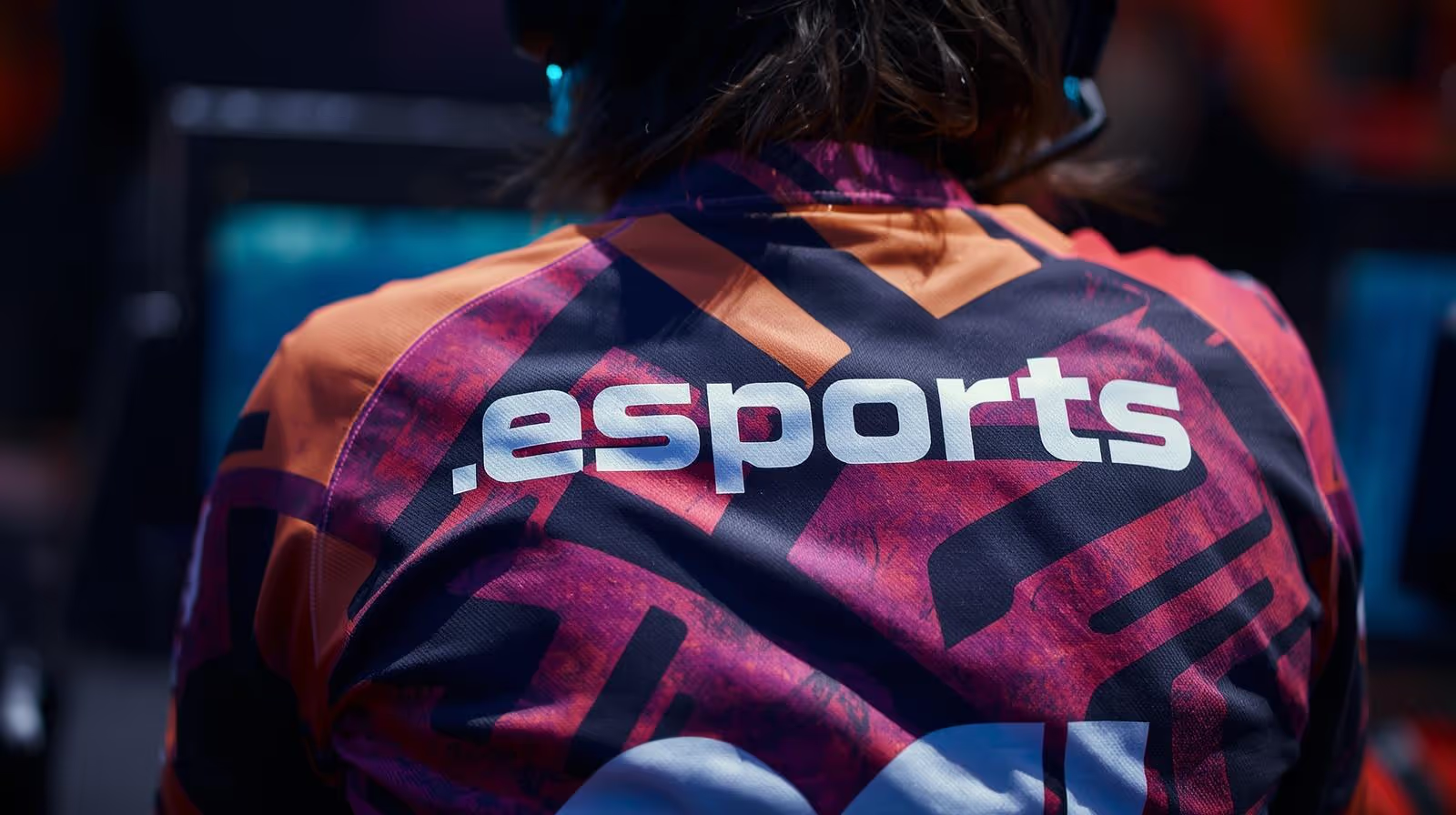
In esports, namespace control turns simple names into scarce assets worth millions. Teams like TSM, valued at $410 million back in 2022, fight for short, memorable handles to build fan loyalty and attract sponsors. But who gets to set the rules for identity online, especially as the industry eyes $3.5 billion in revenue by 2026?
A namespace acts as a controlled naming layer, much like a top-level domain or closed system. It creates inventory that grows precious over time because demand outpaces supply. In esports, this means premium names for teams, tournaments, creators, sponsors, and tools become goldmines.
Consider teams first. They need names like FaZe or Cloud9 to anchor websites, apps, and merch. Without control, copycats dilute their brand and steal traffic.
Tournaments face the same issue. Events like the Esports World Cup, with its $75 million prize pool this year, rely on unique names to dominate search results and marketing. Sponsors pour cash into visibility, so a locked namespace prevents fraud and boosts deals.
Creators and tools benefit too. Streamers grab handles that funnel viewers to content; sponsors link them to campaigns. As scarcity hits, early owners flip names for profit, similar to rare digital collectibles.
The .esports TLD stands out here. It's onchain and powered by Freename, which means immutable ownership and true scarcity baked in from day one. Controlling a sector-specific TLD like this unlocks financial upside through registrations, renewals, and exclusive partnerships.
Businesses ignore this at their peril. Namespace control shapes power flows in a market projected to hit nearly $10 billion by some estimates. It secures branding, cuts risks, and opens revenue streams others can't touch.
This post breaks down the mechanics, valuations, and strategies. You'll see why smart players grab control now, before names vanish.
Think of namespace control as a factory that produces branded names on demand. You own the blueprint, set the prices, and decide who gets access. In esports, this setup turns vague online identities into locked-down revenue machines. Teams, leagues, and sponsors pay top dollar for spots in your system. Because supply stays fixed, values climb as the market heats up.
A namespace starts with root authority. This gives you power over the top level, like .esports. You craft the registration policy, which spells out who qualifies and how they apply. Then comes the premium name list, where short or prime names carry extra fees. Dispute rules handle conflicts, often favoring first-come or verified users. Finally, ongoing governance lets you tweak rules, enforce compliance, and collect renewals.
Owning one name, say team.esports, means you hold just that spot. But controlling the whole namespace lets you sell hundreds more, like league.esports or sponsor.esports. For example, a top team grabs cloud9.esports for its site and merch. Meanwhile, the operator flips faZe.esports to creators or events. This scales your asset fast.
Social handles tie you to one site's rules. Platforms change terms overnight, suspend accounts without warning, or let impersonators run wild. Reach often demands paid boosts now; organic visibility fades. What happens if they tweak verification and boot your blue check?
A controlled namespace flips that script. You own it outright, so it ports across browsers, apps, and emails. Rules stay yours, blocking fakes at the root. Consistency builds across channels. Sponsors trust it more because no single outage kills your brand.
Operators build more than names; they craft a trusted directory. Verified teams list at team.esports. Official events shine at tournament.esports. Partners claim sponsor.esports for deals. This covers ticketing at tickets.esports and merch at shop.esports.
Trust emerges from clear rules and standards. You enforce naming conventions, like no hyphens for premiums. Fans spot real from fake instantly. As a result, buyers pay higher rates. Leagues charge sponsors extra for prime spots. Everyone values the clean market map it provides. In short, order boosts spending across the board.
Selling names marks just the start. Real money flows from scarcity, smart rules, and built-in distribution channels. Operators of namespaces like the .esports TLD capture ongoing value because they control supply in a booming market. Esports revenue could hit $757 million by 2026, or even $5.1 billion per some forecasts. Demand surges for premium spots. As a result, this control creates layered income streams that outlast one-off sales.
Teams grab names like tsm.esports or faze.esports to lock in identity. Tournaments claim spots such as esl.esports. Fans and sponsors follow. But why do these assets hold such pull? Because they sit at the heart of fan engagement and business ops.
Short names act like rare real estate. Supply stays fixed at one per namespace. Demand spikes for handles tied to teams, games, cities, or roles. Think tsm.esports, lol.esports, la.esports, or tickets.esports. These spots vanish fast.
Esports realities amplify this. Teams rebrand or merge often, chasing fresh appeal. New titles like PUBG Mobile or FIFA esports circuits pop up yearly. Tournament series expand, too. ESL Pro League draws massive crowds, for example. Each shift boosts value for matching names. Holders wait for the right buyer or renew at higher rates.
Brands practice defensive buying, too. They snap up shop.esports or stats.esports to block misuse. Copycats hurt trust. So, companies pay premiums upfront. This keeps inventory tight. Prices climb as the sector grows.
Rules set the price floor. Verification weeds out fakes, so teams prove status before claiming team.esports. Reserved lists hold back prime names for big players. Eligibility limits spots, like team-only access.
These steps build trust. Buyers know disputes favor the verified. Brand protection blocks squatters. Tighter rules mean fewer sales, however. Volume drops, but margins rise. Revenue shifts to premiums and renewals.
For instance, operators charge extra for cloud9.esports. Policies justify it. Fans trust the address. Sponsors bid higher. Simple rules turn hype into steady cash.
A stable name cuts marketing costs. Fans recall faze.esports easily. No paid ads needed to pull them back each season. What does it cost to reacquire attention without that anchor? Teams spend millions yearly on boosts alone.
Partnerships thrive, too. Team drops land at drops.esports. Ticket sales flow through tickets.esports. Roster pages sit at rosters.esports. Community hubs build at discord.esports. Sponsors link directly.
Over time, this saves big. Organic traffic grows. Recall sticks because addresses match brands. Operators profit from the traffic they enable. Everyone wins in the chain.
Sector TLDs such as .esports work like real assets because they generate predictable cash flows from registrations and renewals. Owners forecast revenue much like they do for property or media deals. Demand grows with the industry, yet supply stays fixed. So, how do you put a number on that control? Start with a basic model. Then compare it to known esports rights. Factors like governance adjust the final value.
Build your model step by step. First, estimate eligible buyers. Professional teams number in the thousands worldwide; add hundreds of leagues and tournaments, dozens of venues, thousands of creators with large followings, and scores of vendors. Use ranges because exact counts shift: say 1,000 to 3,000 teams, 100 to 300 leagues, 50 to 200 venues, 5,000 to 10,000 creators, and 500 to 1,500 vendors.
Next, split them into tiers. Premium buyers include top teams like TSM or FaZe, major events like ESL Pro League, and big sponsors. They target short names such as team.esports or lol.esports. Charge $10,000 to $100,000 upfront, plus $1,000 to $10,000 yearly renewals. Standard tiers cover smaller players at $1,000 to $5,000 initial and $100 to $500 renewals.
Set conversion rates next. Assume 20% to 50% of premiums convert in year one, rising to 60% to 80% by year three as awareness builds. Standards hit 10% to 30% initially, then 40% to 70%. These rates depend on marketing and industry growth.
Finally, forecast over three to seven years. Multiply units by tiers, rates, and pricing. Year one might yield $5 million to $20 million. By year five, renewals add 70% of that as hold rates exceed 90%. Discount future cash at 10% to 20% for risk. Uncertainty runs high, so run scenarios: low growth caps at $50 million net present value; high hits $500 million as revenue climbs to $1 billion to $10 billion by 2026.
Operators test these inputs against real registrations. Adjust as data flows in.
Namespace deals mirror esports media rights, which fetch millions yearly. ESL and BLAST sell broadcast packages for $10 million plus per season. Leagues like LEC lock in similar figures with Riot. A TLD operator collects from many such deals at once, not one partner.
Naming rights fit next. Arenas like the Intuit Dome or Crypto.com Arena command $20 million to $100 million over 10 to 20 years. Events grab $1 million to $5 million annually. Premium .esports names act the same: teams pay for faze.esports visibility, much like stadium branding. Yet namespaces scale to hundreds of buyers, not one.
IP licensing rounds it out. Games license skins or merch for $5 million to $50 million deals. Sponsorship packages hit $2 million to $10 million per tier. Names serve as both brand rights and channels; faze.esports hosts sites, emails, and apps. The key difference? One namespace feeds dozens of these streams. Sponsors bid on sponsor.esports packages. Leagues bundle tournament.esports with media upsells. You capture value across the board.
Strong governance lifts multiples from 5x to 15x earnings. Clear dispute processes resolve claims fast, often in weeks. Buyers favor first-come for verified users. Anti-scam enforcement blocks fakes at registration. Verification ties to team IDs or league badges.
Security matters too. Onchain designs like .esports prevent hacks and downtime. Uptime hits 99.99%, so sites stay live during peaks. Predictable policies avoid surprises; no mid-year rule shifts.
Brand safety seals sponsor comfort. Clean namespaces draw bigger checks because fakes vanish. Sponsors link campaigns without fraud risk. However, over-minting low-quality names erodes trust; dilute premiums, and values drop 20% to 50%.
Weak spots cut value fast. Slow disputes chase buyers away. Poor enforcement invites squats. Sponsors pull back from risky zones. Strong setups command premiums; buyers pay for peace of mind.
Operators turn namespace control into steady cash by layering sales, services, and partnerships. You start with one-time name deals, then add recurring upsells. Demand in esports stays high because teams and events need reliable identities. As a result, smart pricing and bundles create flows that last years. Consider how .esports handles this; its onchain setup ensures permanent ownership, so buyers commit once but operators build ongoing value through extras.
Premium names command top prices because they act as category killers. Tickets.esports draws event traffic instantly. Finals.esports grabs search volume for big matches. Operators set these at $10,000 to $100,000 upfront, based on length and relevance. Short, exact matches sell fastest; longer ones go cheaper.
Auctions boost price discovery. You list names like lol.esports or faze.esports on open bids. Competition from teams and sponsors reveals true value. For example, a hot tournament name might start at $5,000 and climb to $50,000. This method works best for high-demand spots, as it draws multiple buyers.
Direct sales suit strategic fits. Approach a top team with cloud9.esports before public launch. Negotiate bundles that include extras. However, reserve sensitive names first. Block major games like lol.esports for official partners. Hold integrity terms such as fairplay.esports or banhammer.esports. Regulators might claim compliance.esports. These steps cut legal risks and build trust. In short, reservations protect your asset while sales fill the books.
Add-ons turn one-time buys into sticky revenue. Verified badges prove authenticity; fans trust team.esports with a blue check. Safe link hubs centralize bios and streams, avoiding dead links. Single sign-on lets users access apps or merch seamlessly. Dispute support resolves claims fast. Redirect tools point old handles to new ones.
Services generate repeats even if names cost once. You charge $500 to $2,000 yearly for the bundle. Buyers renew because downtime kills deals. Operators profit from uptime guarantees and custom tools.
Take team staff onboarding. New hires get staff.esports emails with verified logins. Sponsors love landing pages at partner.esports, complete with analytics. These perks lock in users. As a result, churn drops below 10%. Why switch when everything works in one place?
Partners amplify reach and sales. Bundle names with tournament registration; ESL offers esl.esports to qualifiers. Ticketing platforms add tickets.esports to checkout flows. Merch sites push shop.esports for drops. Stats providers claim stats.esports for leaderboards. Broadcasters promote event.esports during streams.
These channels drive adoption. Leagues push verified names to teams, filling inventory fast. Platforms integrate redirects, boosting traffic. Events reward winners with custom names. Everyone gains as the namespace fills.
Who benefits most if it becomes the default directory? Leagues do, because they control listings and charge sponsors for spots. Meanwhile, operators collect fees at scale. For instance, a pro circuit bundles 100 names yearly. Revenue doubles from shared promo. In addition, cross-promotions lift values across the board.
Namespace control promises big returns, yet it carries real risks. Poor enforcement erodes trust fast. Sponsors flee messy spaces. Fans ignore fakes. Therefore, operators must balance costs with safeguards. Strong rules preserve value over time. Weak ones wipe it out. How do you weigh these trade-offs?
Enforcement forms the backbone of any namespace. Operators invest in moderation to scan registrations daily. They verify applicants against league lists or social proof. Takedowns target squatters who grab team.esports before the real owner arrives. Dispute resolution handles claims through clear processes, often within weeks.
These steps protect sponsors first. They demand clean links like sponsor.esports for campaigns. Fakes dilute reach and waste ad spend. Fans benefit too. They spot official sites easily, so they buy merch without doubt. As a result, engagement rises.
Costs add up, however. Staff, tools, and legal reviews eat 20% to 30% of early revenue. Yet skipping them destroys more. One scandal, like a hacked tournament.esports during playoffs, scares buyers away. Prices crash. Renewals drop. In short, enforcement spends money to make money stick.
Operators like those behind the .esports TLD build onchain verification. It blocks fraud at the root. Buyers renew because trust holds. Ignore this, and value vanishes quicker than premiums build it.
Disputes hit esports hard. Team name overlaps spark fights, such as when new squads pick handles close to established ones like FaZe or TSM. Game title conflicts arise too; publishers claim lol.esports before leagues settle in. City team claims grow common, with groups battling over la.esports or ny.esports rights. Impersonation rounds it out, as creators mimic pros on faze.esports clones.
Recent cases highlight the mess. The International Olympic Committee wrestled IP splits for Olympic Esports Games, dividing Olympic marks from game publishers like Blizzard. Creator partnerships fuel more clashes over likeness and sponsorship names. Courts rule on confusion, yet delays hurt everyone.
Plan ahead with simple policies. Create reserved lists for top teams and games. Offer verified tiers that prove status upfront. Set clear appeals, like 30-day windows with evidence requirements. These choices cut legal fights. Buyers grab names confidently. As a result, sales speed up.
Keep language basic. First-come wins for verified users. No endless challenges. Strong setups turn risks into routine checks.
Premium names won't sell alone. Teams ignore them without push. Go-to-market demands anchor tenants, like top squads claiming tsm.esports early. Event moments help too; award winners.esports at finals for buzz. Simple onboarding seals it, with one-click claims tied to league IDs.
Marketing fills the gap. New TLDs like .esports lack automatic SEO boosts. Google treats them like any domain, so traffic builds through links and ads. Costs deter buyers, especially in markets like Brazil or China. Renewal rates hover low at 32%, as experiments flop without support.
Partnerships drive real uptake. Leagues bundle names with rosters. Platforms add redirects in apps. However, fragmented tech slows progress. Education matters; case studies show success to win skeptics.
What if you skip distribution? Inventory sits empty. Values stall. Push hard, and names become defaults. Operators win big through steady fills.
Namespace control stands as a core asset in esports. It generates scarce inventory for teams, events, and sponsors. Clear rules build trust that drives premium prices. Repeatable channels like registrations and partnerships create lasting revenue.
Operators value sector TLDs such as .esports through unit economics. They count buyers, set tiers, and project cash flows. Governance strength boosts multiples; strong security and enforcement lift values from tens to hundreds of millions. Distribution seals the deal, as partnerships fill names fast. However, risks loom large. Weak trust erodes sales. Disputes slow growth. Poor adoption leaves inventory idle. Smart players balance these with upfront planning.
Teams like TSM already chase short handles to cut platform risks. What names does your organization control outright? Leagues face the same choice. Platforms shift rules often, so portable identities protect brands.
Esports leaders should act now. Audit your current handles and sites. Ask where permanent, onchain naming like .esports reduces dependency. Grab prime spots before demand peaks alongside $5 billion in sector revenue by 2026. Those who secure namespace control today command tomorrow's power flows.
In a market this hot, control the names, control the game. Share your thoughts below: which .esports name would you claim first?
Disclosure:
The .esports onchain TLD is currently held by kooky (kooky.domains) and powered by Freename. This publication maintains full editorial independence.